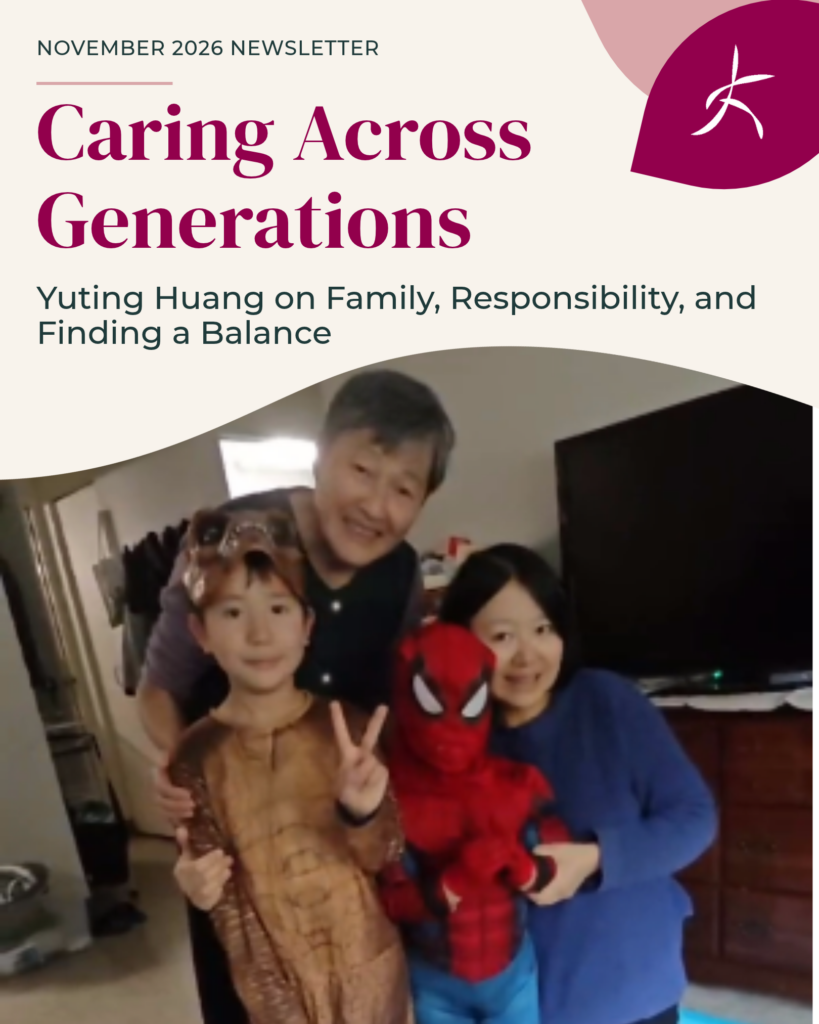
Caring Across Generations: Yuting Huang on Family, Responsibility, and Finding Balance
by Hannah McMillan
Content Note: This article includes a personal account of domestic violence and its impact on family well-being. We encourage readers to engage with the story in a way that feels comfortable for them.
—
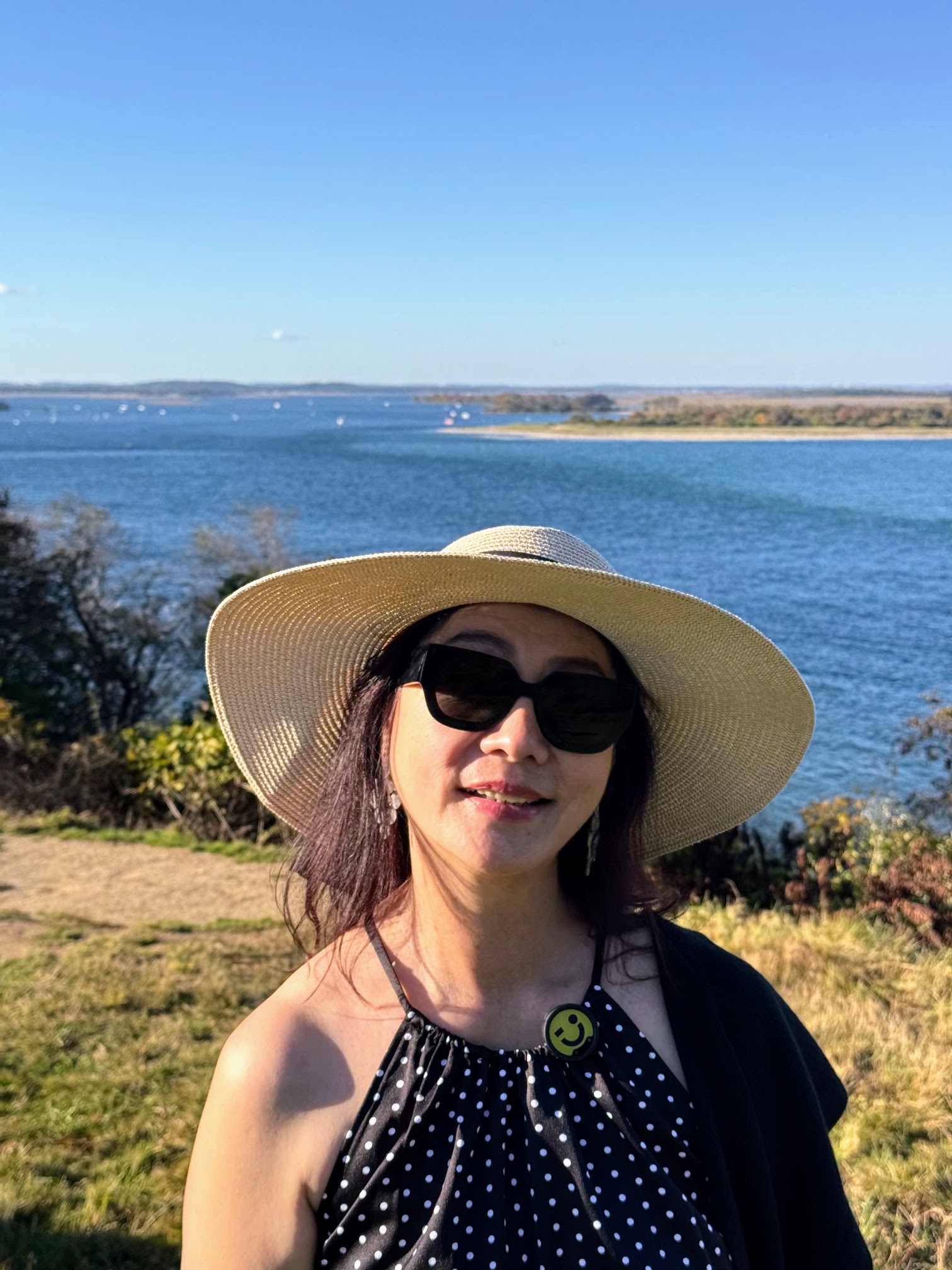
This National Family Caregivers Month, we spotlight Yuting Huang, a mother, daughter, and Community Health Worker whose experiences reflect the responsibilities, challenges, and meaningful connections that shape caregiving across generations.
For Yuting Huang, caregiving is woven into nearly every part of her day.
There are two children to get ready for school, therapy appointments to coordinate, and schedules to rearrange. Between school drop-offs and meetings with educators, she also finds time to help her aging parents navigate healthcare appointments, manage bills, and communicate with service providers.
At home, she is a mother and daughter. At work, she is a bilingual and bicultural Community Health Worker. Across these roles, caring for others is a constant presence in her life.
But amid these responsibilities, finding time to care for herself is not always easy.
As a single mother raising two young children, ages five and eight, both on the autism spectrum, while also supporting her aging parents, Yuting understands the challenges of balancing the needs of loved ones with her own well-being and professional aspirations.
Growing up in China, she learned that caring for family is a deeply rooted cultural value. Today, those values continue to shape how she approaches caregiving, even as she navigates the changing needs of her family and her own hopes for the future.
This National Family Caregivers Month, we spoke with Yuting about the everyday realities of caregiving, the cultural expectations that influence her experiences, and the importance of finding support along the way.
—
Question: What does a typical day look like for you as a caregiver?
Yuting: Usually, in the morning, I send both of my kids to school. They’re currently attending the same school, so after dropping them off, I come home and have some time to work or take care of things around the house.
School ends around 2:30 p.m., but we have therapy appointments throughout the week. Depending on the day, I might need to pick one of them up early to bring them to therapy, and then pick up the other one afterward.
Outside of school, there are also appointments with doctors, dentists, and therapists. Both of my children have Individualized Education Programs (IEPs), so there are meetings with teachers and school staff, too.
On weekends, we usually visit my parents, who live in the same town. My mom cooks for everybody, and my kids love spending time with their grandparents. We also try to do activities like swimming, running, and skating lessons.
It’s a busy schedule, but I’m happy that I’ve become more independent in managing everything.
—
Q: Alongside raising your children, you also help care for your aging parents. How do you navigate those responsibilities?
Yuting: My parents have been in the United States for about seven or eight years, but they still feel much more comfortable speaking Chinese. My father doesn’t speak much English, and while my mother knows some everyday English, she still needs help with things like doctor’s appointments.
I help them with insurance, paying bills, and communicating with providers. We live in the same town, so we talk almost every day.
I would say I spend much more time caring for my kids because they need more support right now. My parents are still independent, and they can sometimes use technology, like Google Translate, to communicate.
As my parents get older, though, I’m becoming more aware of their health. They’re both over 70, and I’ve started noticing changes, especially with my mom.
My goal is to become as independent as possible in caring for my children so that my parents can enjoy their own lives without having to worry so much about us.
—
Q: What does being a caregiver mean to you personally?
Yuting: It’s a journey. In Asian culture, we have this understanding that when our parents get older, we have a responsibility to take care of them. I was born and raised in China, so those values are deeply rooted in me.
I feel the same responsibility toward my children. We make the decision to bring children into the world, so we have a responsibility to care for them, give them a good education, and make sure they’re healthy, both physically and mentally.
Before I had children, I worked in a laboratory. Sometimes I would stay until midnight because I wanted to finish an experiment. But after becoming a mother, that wasn’t possible anymore. I needed to be home for dinner and bedtime.
Now, especially as a single parent, I have to prioritize my children’s needs and find work that fits around their schedules.
I still want to have a career. Finding that balance between working and caring for my family is something I’m always looking for.
—
Q: What has helped you navigate difficult moments in your caregiving journey?
Yuting: About two years ago, my children and I went through a very difficult time involving domestic violence. I eventually had to make the decision to seek a restraining order against their father.
At the time, I wasn’t sure if I was making the right decision. I had hoped we could continue co-parenting, but I began to understand how the conflict at home was affecting my children, even when it wasn’t directed at them.
It was a very difficult transition for all of us.
My parents were a big source of support. My older son spent a lot of time with them, and being around his grandparents helped him gradually recover.
Professional support was also very important. I sought help from doctors and therapists for my children, and I continue to attend mental health counseling myself.
Looking back, I’m glad I made the decision I did. Today, I feel much safer, and so do my children and my parents.
—
Recognizing the Care Behind Caregiving
Yuting’s experiences remind us that caregiving is rarely confined to a single role or responsibility. It can mean supporting children as they grow, helping aging parents navigate unfamiliar systems, or making difficult decisions to protect the well-being of loved ones.
It can also mean learning when to seek support and recognizing that caregivers have needs, aspirations, and identities beyond the care they provide.
For many families, these responsibilities are shaped by cultural values, language access, and the availability of supportive services. Ensuring that caregivers have access to culturally responsive resources, mental health support, and opportunities to pursue their own goals is an important part of building healthier communities.
This National Family Caregivers Month, Asian Women for Health recognizes Yuting and the many caregivers whose contributions often go unseen – because caring for our communities also means caring for those who care for others.