It started with detective shows. Long before she became a psychotherapist, Vion He was a kid in a small city in China, captivated by Sherlock Holmes and the question underneath every case – not who did it but how does a person become who they are? That curiosity never left her. It grew into a lifelong pursuit, and ultimately, her calling.
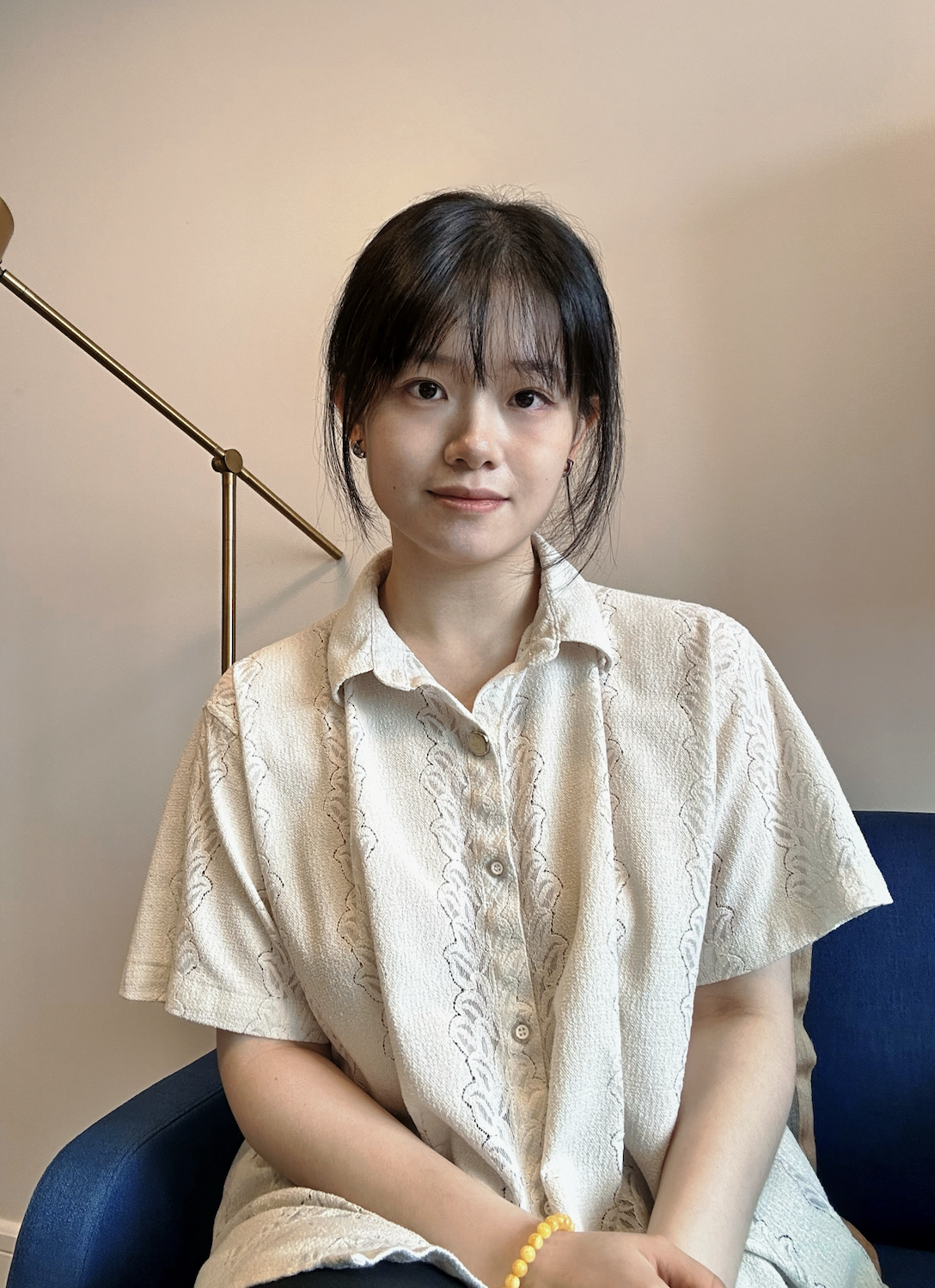
This Pride Month and Immigrant Heritage Month, we’re honored to spotlight Vion He, a Boston-based psychotherapist whose work explores the intersections of mental health, migration, identity, and belonging. Having immigrated from China as a teenager, Vion brings both professional expertise and lived experience to supporting Asian American, LGBTQIA2S+, and immigrant communities.
In this conversation, she reflects on cultural transition, healing, resilience, and what it means to build a sense of home while navigating multiple identities.
Q1. Tell us a little about yourself, and what drew you to this work?
Hi! This is Vion, and I’m currently a psychotherapist practicing in the Boston area. My interest in mental health actually started detective shows, weirdly. Growing up, I loved Sherlock Holmes and crime dramas, and what fascinated me most was trying to understand how people become who they are. Why do we think the way we do? How are our behaviors shaped by experiences and the world around us? Growing up in a small city in China, mental health was rarely discussed in families, schools, or the broader community. As I became more curious about understanding myself, I also began to notice larger patterns around me. Over time, that curiosity evolved into a desire to create spaces where people like me could explore their stories, find directions in difficult moments, and feel less alone.
Q2. You moved to the U.S. as a teenager. How has your own journey of cultural transition shaped your approach to supporting clients through identity development and ‘living between two worlds?’
As someone who spends a lot of my life between Chinese and American cultures, I’ve often felt a sense of in-betweenness. Constantly having to navigate two sets of languages and expectations made me question which version of myself was the “right” one. At times, it felt like living two parallel lives. What I’ve kept returning to is the idea that identity is often more complex than choosing one side over another. Not fitting neatly into a category doesn’t mean something is wrong. My identity was developing then, and honestly, it’s still developing now. That experience shapes the way I think about identity development and cross-cultural experiences in therapy. Rather than helping people find a single “correct” version of themselves, I often invite them to explore different parts of who they are and how those parts can interweave and coexist. Without resolving every contradiction, we learn to become more intentional and comfortable with being more than one thing at once.
Q3. Many people in our communities have had the experience of sitting across from a therapist who didn’t understand their culture, their family, or their language, and quietly deciding therapy “isn’t for them.” For someone carrying that disappointment, how would you encourage them to try again, and what should they look for this time?
You have every right to feel hurt when your culture, family, or identity was misunderstood in a space that was supposed to feel safe. I don’t think therapy is the best fit for every person at every point in their life, and it’s okay to take a step back when needed. If you decide to try again, trust does not have to be given all at once. It can be built gradually as you get a sense of whether a therapist is truly listening and making space for your experience.
When I work with clients who had difficult experiences in the past, we often start simply by getting to know each other as two human beings. We talk about hobbies (mine’s baking!), favorite shows, complaints about the T, and the cultures that shaped us. To me, a culturally-informed therapist is someone who approaches stories with curiosity, humility, and willingness to repair mistakes when they happen. Most importantly, therapy is your space: you have the right to ask questions, share feedback, set expectations, and decide what feels right.
Q4. When the culture you grew up in and the world you live in expect different things from you, how do you build a steady sense of who you are? What helps people stay rooted or build a home far away from home?
I’ve found it helpful to allow my sense of self to be fluid while keeping my values, the principles that guide my decisions, steady. I’ve definitely changed over the years as I moved countries, graduated, and started my career. My identity today is so different from who I was a few years ago, but the values that guide me, such as autonomy, compassion, and connection, have remained surprisingly consistent. I also think staying rooted means making space for grief. Many of us might feel pressure to move forward, adapt, and be grateful, but there can also be real sadness in what we leave behind. I’ve learned that it’s possible to feel homesick and hopeful at the same time.
When it comes to building a home, I noticed myself paying attention to where, how, and when I felt more like myself. Over time, home feels less like a place and more like the people, spaces, and relationships that help me feel grounded. In many ways, I think belonging is not only something we find but also something we actively construct.
Q5. What does Pride Month mean to you, especially at the intersection of queerness and AANHPI heritage?
Honestly, it’s hard to fully put into words what Pride Month feels like. There is something so powerful about seeing people take up space openly and unapologetically! Growing up in a culture where queerness was rarely discussed and certainly not celebrated, Pride introduced me to the idea of possibility. It showed me that there were other ways to live, other ways to love, and entire communities creating lives that felt authentic to them. For Asian queer communities, Pride also carries an element of resistance against shame, silence, and the historical narratives that taught us certain parts of ourselves should remain hidden. As a therapist, one of my favorite parts of Pride Month is celebrating with clients as they explore who they are and who they want to become. In those moments, in the room together, we are bonded by something hopeful.
Q6. So much of the conversation about queerness in immigrant families centers on the moment of disclosure or rejection. What do you think often gets overlooked in the stories that fall somewhere in between?
Some of the painful conversations I’ve had are not only about rejection but also the space between what happened and what we hoped would happen. When I work with clients around coming out and family relationships, we sometimes spend time sitting with the unresolved-ness. Sometimes there is sadness that the talk didn’t go the way they imagined. Sometimes there is grief for a version of the family they hoped to have. Sometimes there is uncertainty about what comes next. I don’t think there is a perfect way to move through those conversations. There are often questions, doubts, and moments of disappointment. And I’ve also seen people slowly make room for those feelings and meet themselves with compassion. To me, that process, however messy or unfinished it feels, may be its own form of moving forward.
Q7. For someone who isn’t out, or isn’t ready, what does honoring yourself look like in the meantime?
I think there can be a lot of pressure to have everything figured out, including knowing exactly who you are, what labels fit, or when and how to share that part of yourself with others. In my own experiences and therapy work, many of us spend time in uncertainty, and that doesn’t make us any less ourselves. Interestingly, one thing I always do is smile whenever I see a Pride flag or symbol on the street. During Pride Month, that means a lot of smiling! It’s a very small thing, but it reminds me that I’m not alone and that there are people like me in the world. I think honoring yourself can happen in these small, quiet moments. It doesn’t always have to look like a big declaration. Sometimes it simply means allowing yourself to be patient with your confusion, and exist exactly where you are.
Q8. Many in our communities carry generational trauma, anxiety, or depression – often unspoken. What are some ways we can begin to recognize and address these experiences, both individually and collectively?
Growing up, I heard people around me talk about headaches, back pain, and trouble sleeping far more often than I heard conversations about anxiety, grief, or sadness. Looking back, I think that was one of my earliest discoveries about mental health: when we don’t have the language for distress, our bodies are surprisingly honest. Sometimes that shows up as physical symptoms, constantly feeling on edge, or carrying some tension that never fully goes away. In my work with clients, we often start with noticing those sensations and finding language for the emotions underneath them. Naming what we’re feeling doesn’t solve everything, but it helps us understand our experiences with more clarity and respond with more choices. On a community level, I also believe healing begins when we create spaces where these conversations can happen openly. Every honest connection helps make room for experiences that our previous generations may not have had the language, space, or permission to talk about.
Q9. The numbers on suicide and mental health in Asian American communities are really sobering. Without only focusing on the crisis – what gives you hope about where things are heading?
What gives me hope is that I see more and more people around me becoming curious about their own experiences. In my clinical work, I sometimes witness people putting words to their feelings for the first time, asking questions they weren’t encouraged to ask before, and recognizing that what they have been carrying did not come out of nowhere. One of my favorite moments is when someone goes from asking “What’s wrong with me?” to wondering “Maybe my reactions make sense.” I think that takes a tremendous amount of courage. I also see more community organizations, role models, and conversations that are helping normalize mental health in Asian American communities. The challenges are still very real, and hope comes from the fact that more people are finding support and language to talk about their stories and examining the patterns passed down through generations.
Q10. What are some daily or regular practices that you recommend for cultivating resilience, joy, or a sense of agency, especially during difficult times?
A common emotion I feel during difficult times is powerlessness. It can be about a situation, someone’s reaction, uncertainty about the future, or larger systems that are outside of our control. In therapy, we often talk about the reality that some things cannot be changed simply through positive thinking or trying harder. What I myself find helpful is reconnecting with what remains within our influence. Even when we cannot control the outcome, we still have choices in how we move through the experience. Sometimes that looks like turning down the imaginary conversation we have in our heads. Sometimes it means reaching out to people who can remind us that our feelings make sense. And honestly, sometimes to me it’s humor. I think joy and sense of agency are often built in small, ordinary actions. Knowing what brings you comfort, meaning, or laughter, and intentionally making space for those things in daily life, can be a powerful way of cultivating resilience.
Q11. If someone’s just at the beginning of navigating queerness and immigrant heritage – exhausted, unsure, not even sure what they need – what advice would you give them?
At times queerness may feel like a Western concept, something that exists separately from our cultural identity, like two hands reaching toward each other but never touching. I wonder if many of us inherit a script for how life is “supposed to” be, and as queer Asian persons, there are moments when none of the available scripts feel right. What I would hope for someone at the beginning of that journey to know is that you do not have to force yourself into an identity, community, or story that doesn’t feel like yours. I often think of it like cooking: everyone has different tastes, ingredients, and ways of making a meal. There isn’t one correct recipe for being queer, Asian, immigrant, or all of those things at once. Part of the process is figuring out what fits, what doesn’t, and what you want to create for yourself. And while you’re experimenting, remember that you don’t have to do all the cooking alone :) Talk to people you trust, seek out communities, and allow yourself to receive support along the way.