
Bone Health & Osteoporosis – Pilot Program
Osteoporosis is often called a “silent disease” because bone loss can occur without symptoms until a fracture happens. Its effects can be significant, including pain, disability, and loss of independence.
For Asian American communities, the picture is complex. Research has found that Asian adults in the United States often have lower bone mineral density than White adults, while osteoporosis and fracture risk can vary considerably across Asian ethnic groups. Yet Asian Americans remain underrepresented in osteoporosis research, and diverse communities are often grouped together under a single “Asian” category—masking important differences in risk, experiences, and barriers to care.¹
At Asian Women for Health, we believe prevention begins with access to health information that people can understand, trust, and use. That means bringing education into community, in ways that reflect people’s languages, cultures, and lived experiences.
[1] Lo JC, Yang W, Park-Sigal JJ, Ott SM. Osteoporosis and Fracture Risk among Older US Asian Adults. Current Osteoporosis Reports. 2023;21(5):592–608. doi:10.1007/s11914-023-00805-7.
Bringing Bone Health Education into Community
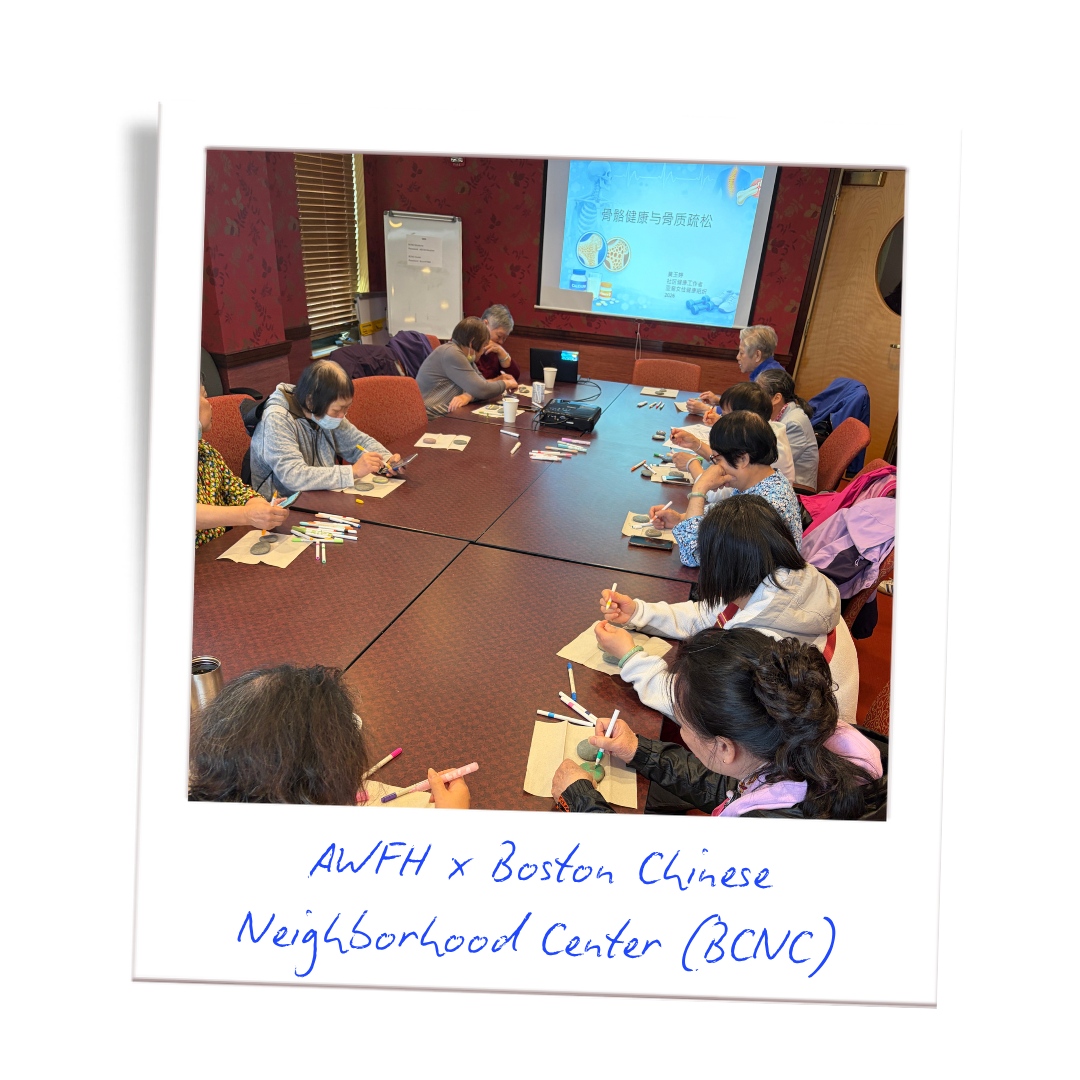
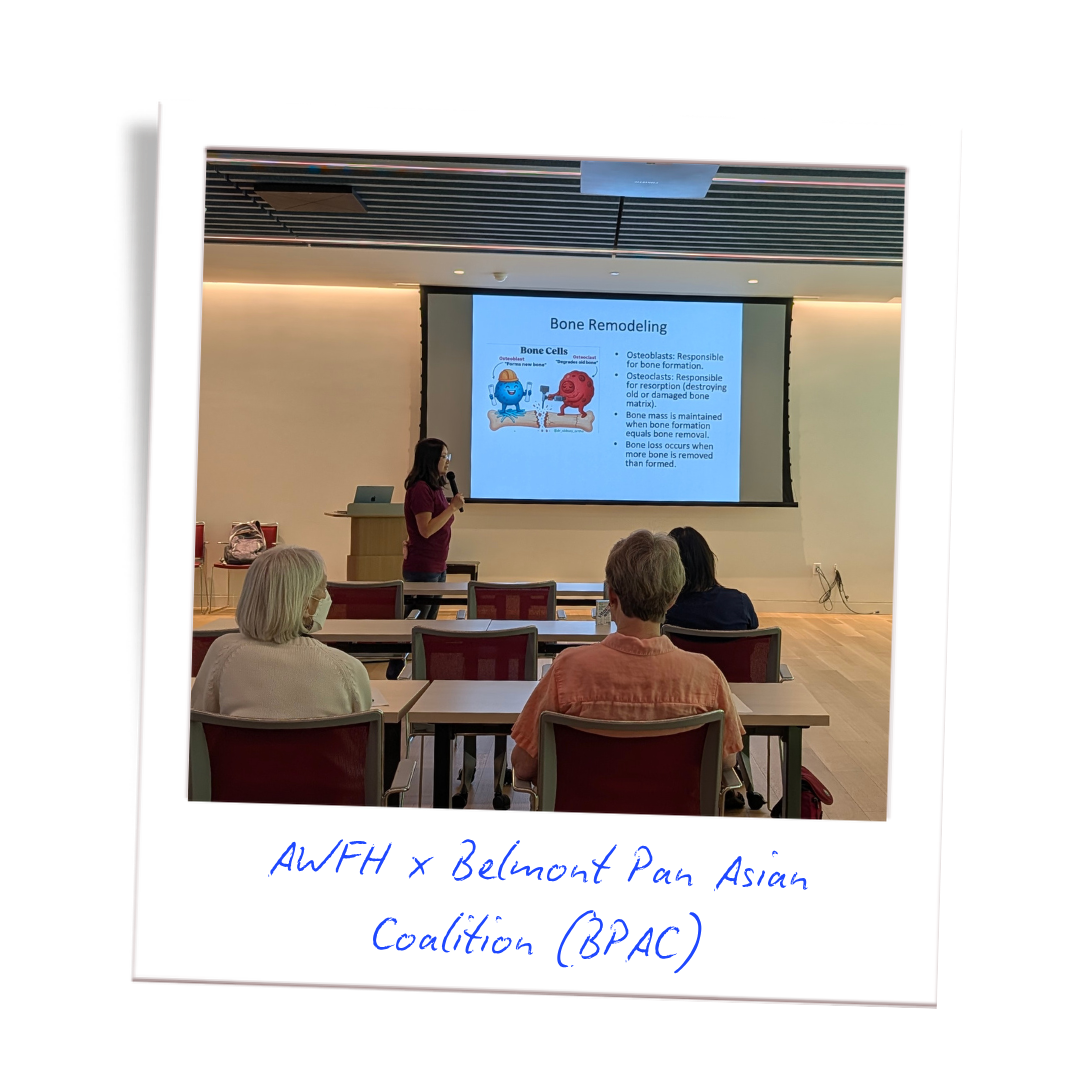
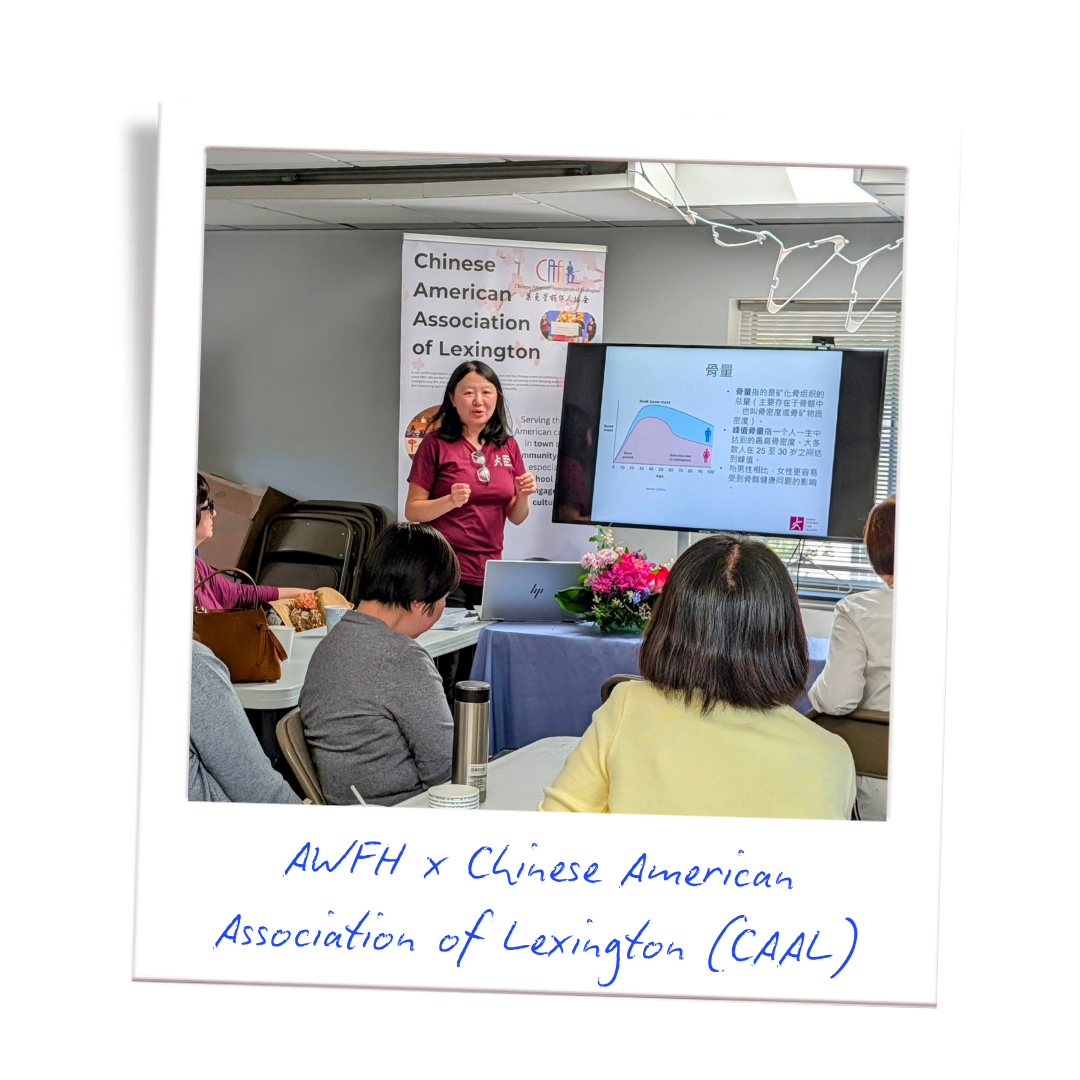
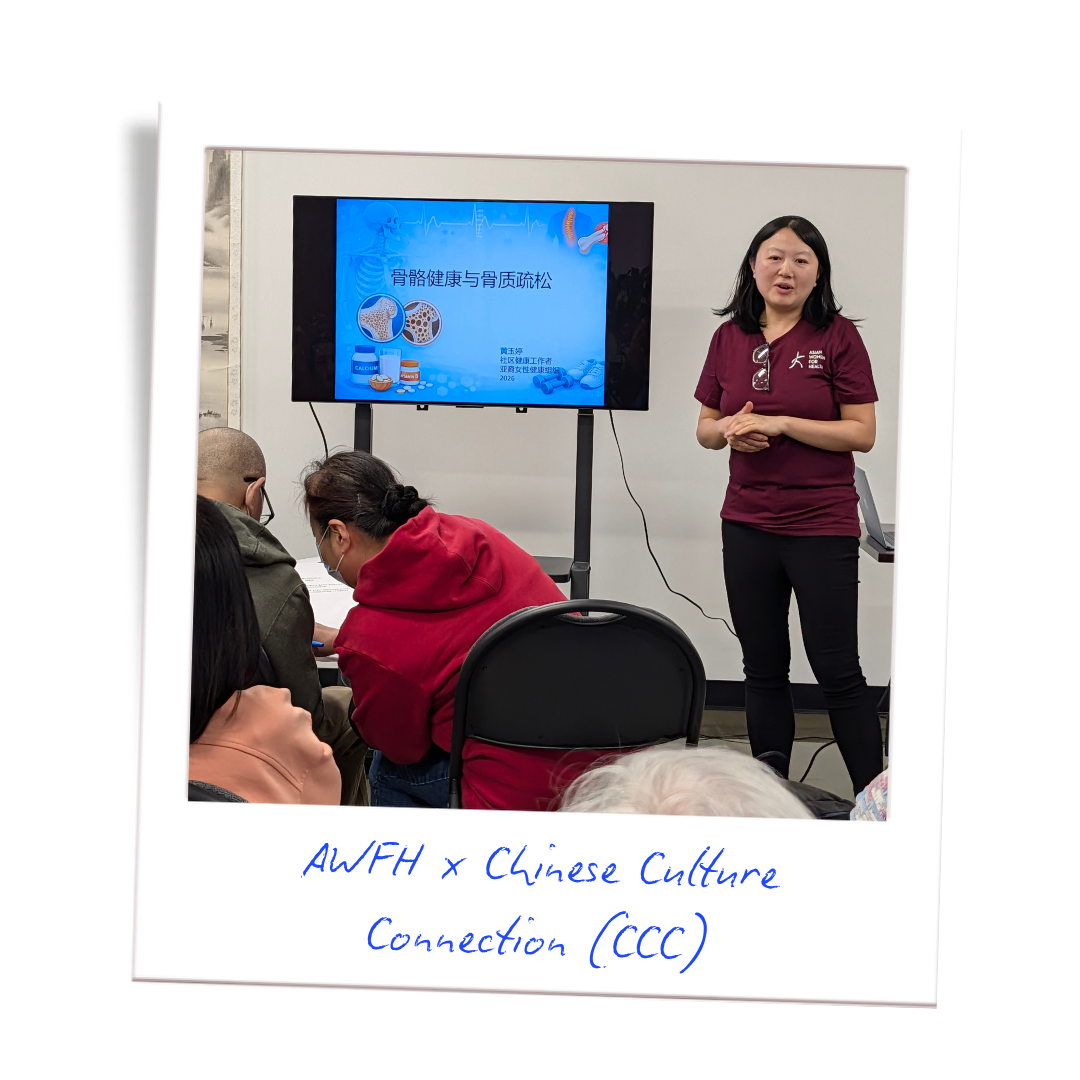
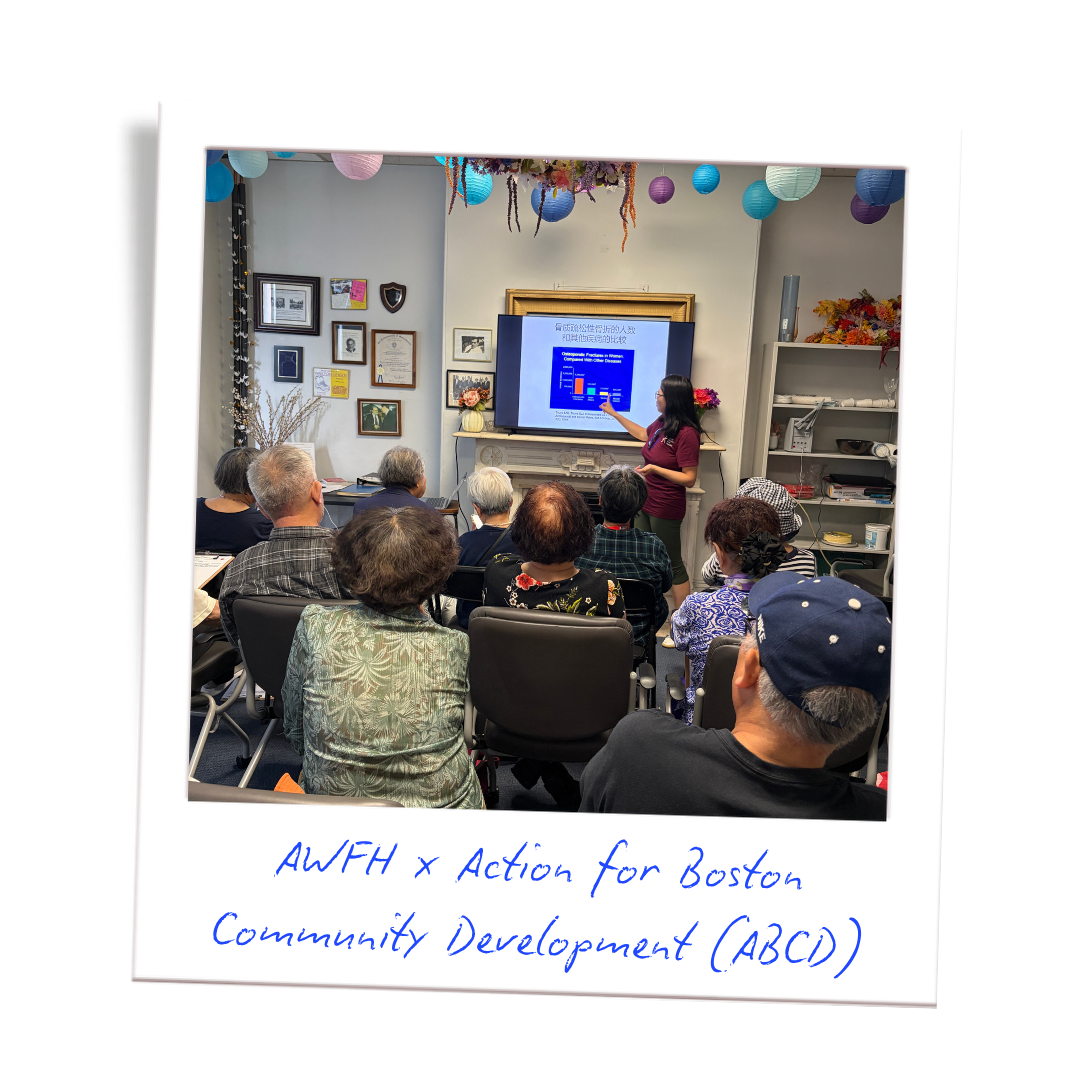
In 2026, Asian Women for Health (AWFH) launched a six-month Bone Health & Osteoporosis Education Pilot to improve osteoporosis awareness and bone health literacy among Chinese American older adults across Greater Boston.
From January through June, we partnered with 5 local community organizations to deliver 6 workshops in places where older adults already gathered for learning, wellness, and social connection.
Yuting Huang, a bilingual Mandarin-English Community Health Worker, led the workshops, helping participants understand osteoporosis, risk factors, nutrition, physical activity, screening, and fall prevention—and connect that information to their everyday lives.
Our Pilot: At a Glance
A snapshot of who we reached and how we brought bone health education into community.
Our Community Partners
Community partnership was central to the pilot. AWFH partnered with 5 community organizations across Greater Boston to bring bone health education into places where older adults already gathered, connected, and felt comfortable asking questions. These organizations brought more than space and outreach. Their relationships with community members helped us reach older adults in familiar settings and create opportunities for conversation, questions, and shared learning.



What We Learned
The pilot showed that community-based education can do more than increase awareness. Participants left with a stronger understanding of bone health and felt better prepared to take practical steps to support it.
- 96.3% felt better prepared to take care of their bone health
- 77.4% reported increased awareness of osteoporosis and bone health
- 92.7% intended to incorporate weight-bearing physical activity into their lives
Participants also reported greater understanding of osteoporosis risk factors, nutrition, physical activity, and the importance of screening following the workshops.
Healthcare Access ≠ Health Understanding
One finding particularly stood out. Many participants had already engaged with the healthcare system around their bone health, including through bone density screening or a diagnosis of low bone density or osteoporosis. Yet before the workshops, confidence in understanding osteoporosis prevention remained relatively modest.
For us, this reinforced an important lesson: receiving healthcare doesn’t always mean having the information and confidence needed to act on it.
The pilot highlighted an important role for community-based health education: helping people make sense of health information and connect it to decisions they can make in their everyday lives.
Supporting Your Bone Health
Bone health is something we can support throughout our lives. Understanding your individual risk—and knowing what questions to ask—can be an important first step.
- Stay active. Weight-bearing and muscle-strengthening activities can help support bone and muscle strength.
- Support your nutrition. Calcium, vitamin D, protein, and a balanced diet all play important roles in maintaining healthy bones.
- Know your risk. Age, menopause, family history, previous fractures, certain medications, and health conditions can affect osteoporosis risk.
- Start the conversation. Talk with your healthcare provider about your individual risk and whether bone density screening may be appropriate for you.
Questions to ask your healthcare provider:
- What are my risk factors for osteoporosis?
- Should I have a bone density test?
- Am I getting enough calcium and vitamin D?
- What kinds of physical activity are appropriate for me?
- Could any of my medications or health conditions affect my bone health?
Learn More About Bone Health
Looking for more information about osteoporosis, screening, nutrition, exercise, or caring for your bones? These trusted resources can help you learn more.
- NIH: Bone Health & Osteoporosis — Information from the National Institute of Arthritis and Musculoskeletal and Skin Diseases (NIAMS) on osteoporosis, bone density testing, exercise, calcium and vitamin D, and maintaining healthy bones.
- Bone Health & Osteoporosis Foundation: Patient Resources — Guides, videos, and educational materials about osteoporosis prevention, diagnosis, treatment, exercise, and living with osteoporosis.
- NIH: Osteoporosis Overview — An accessible overview of osteoporosis, including risk factors, diagnosis, treatment, and steps people can take to support their bone health.