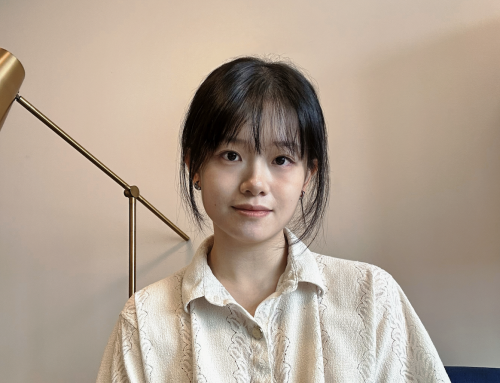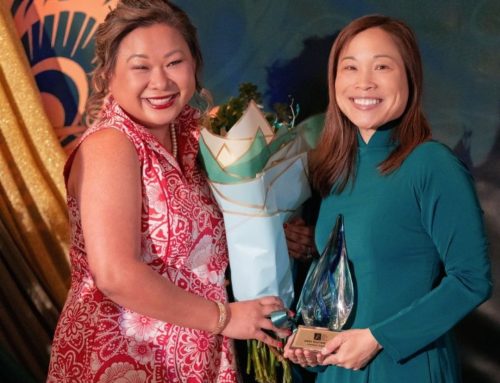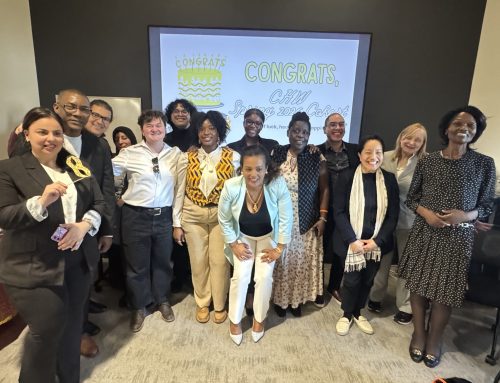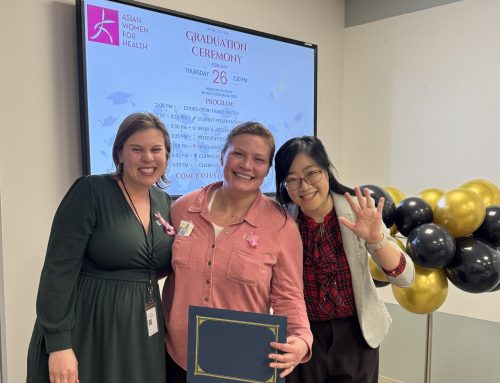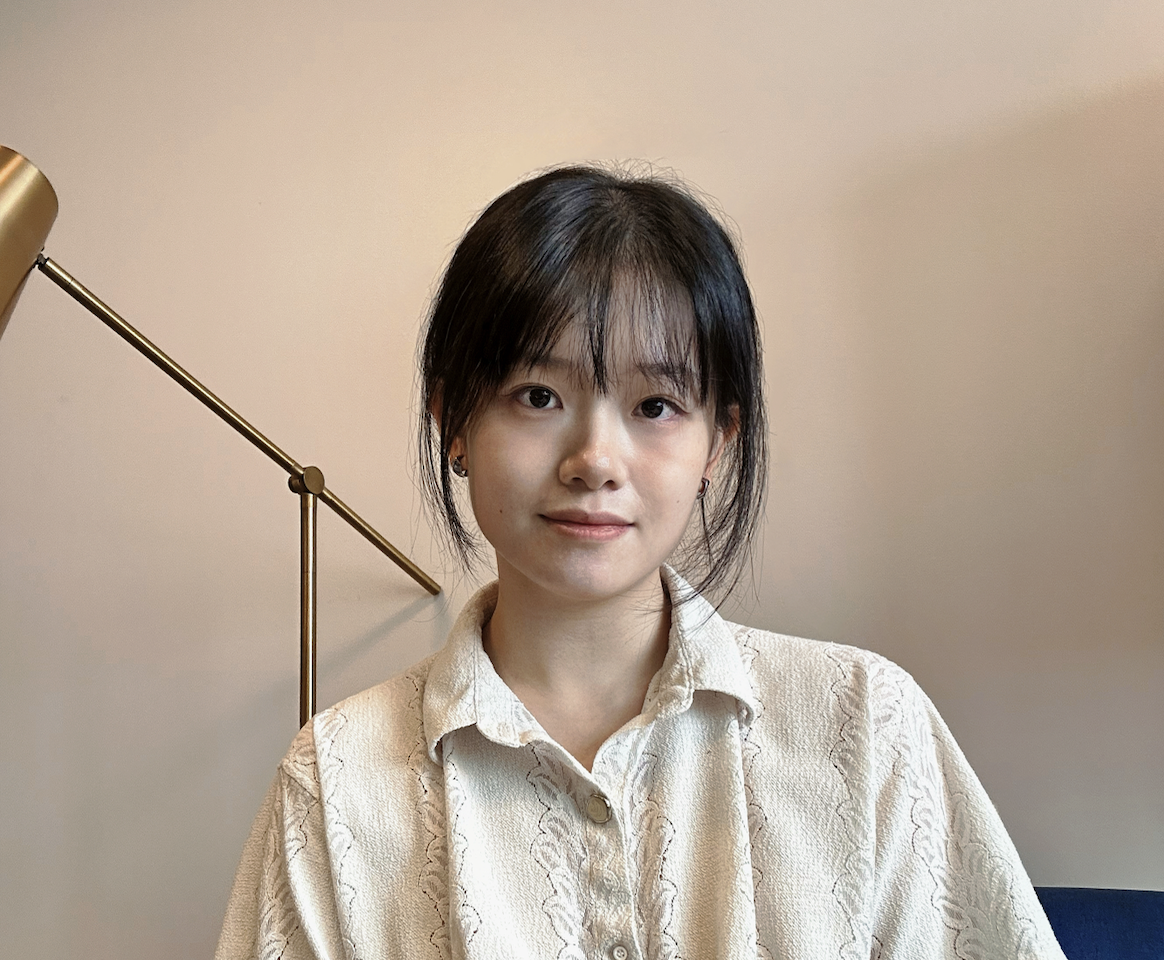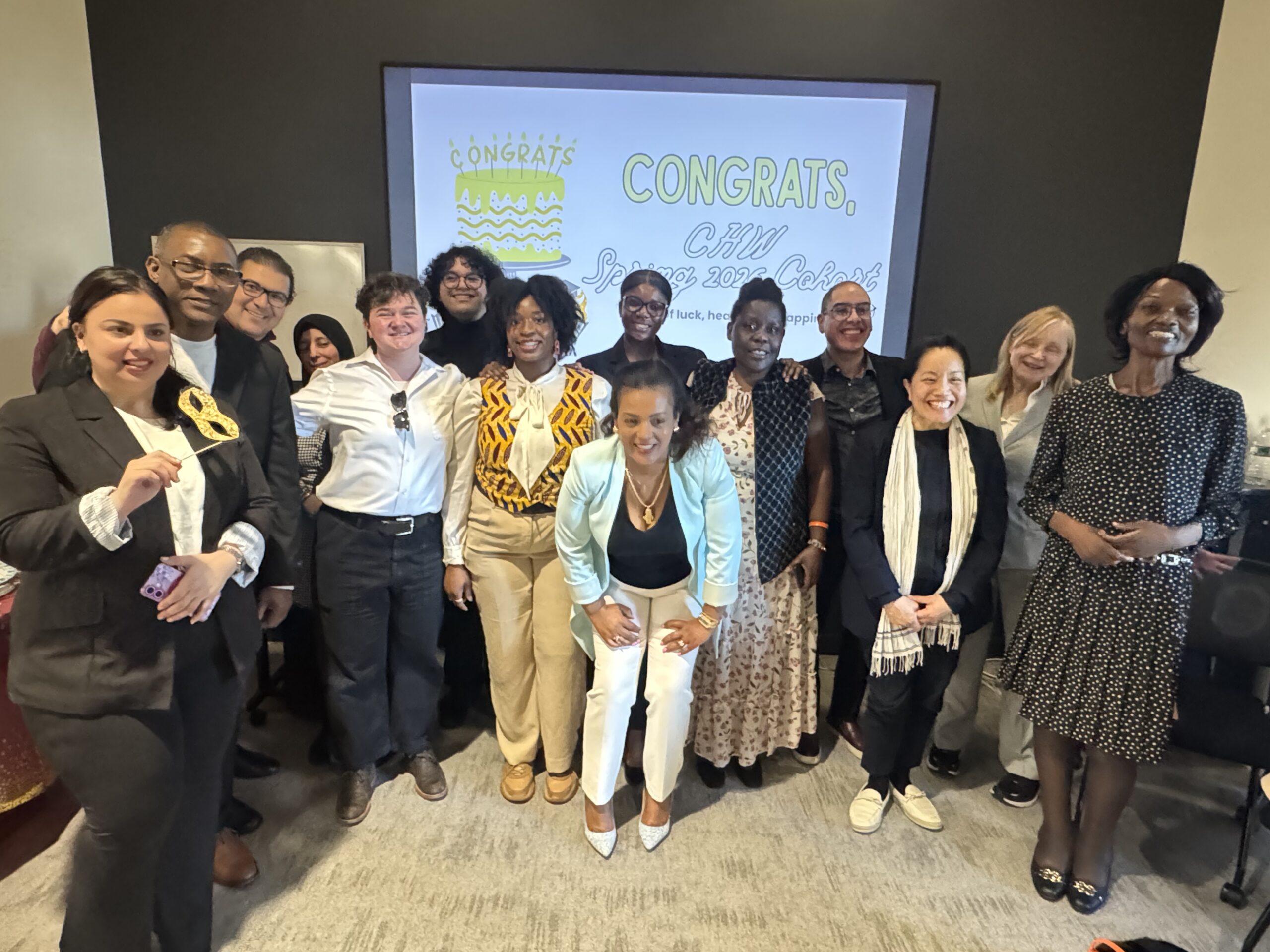
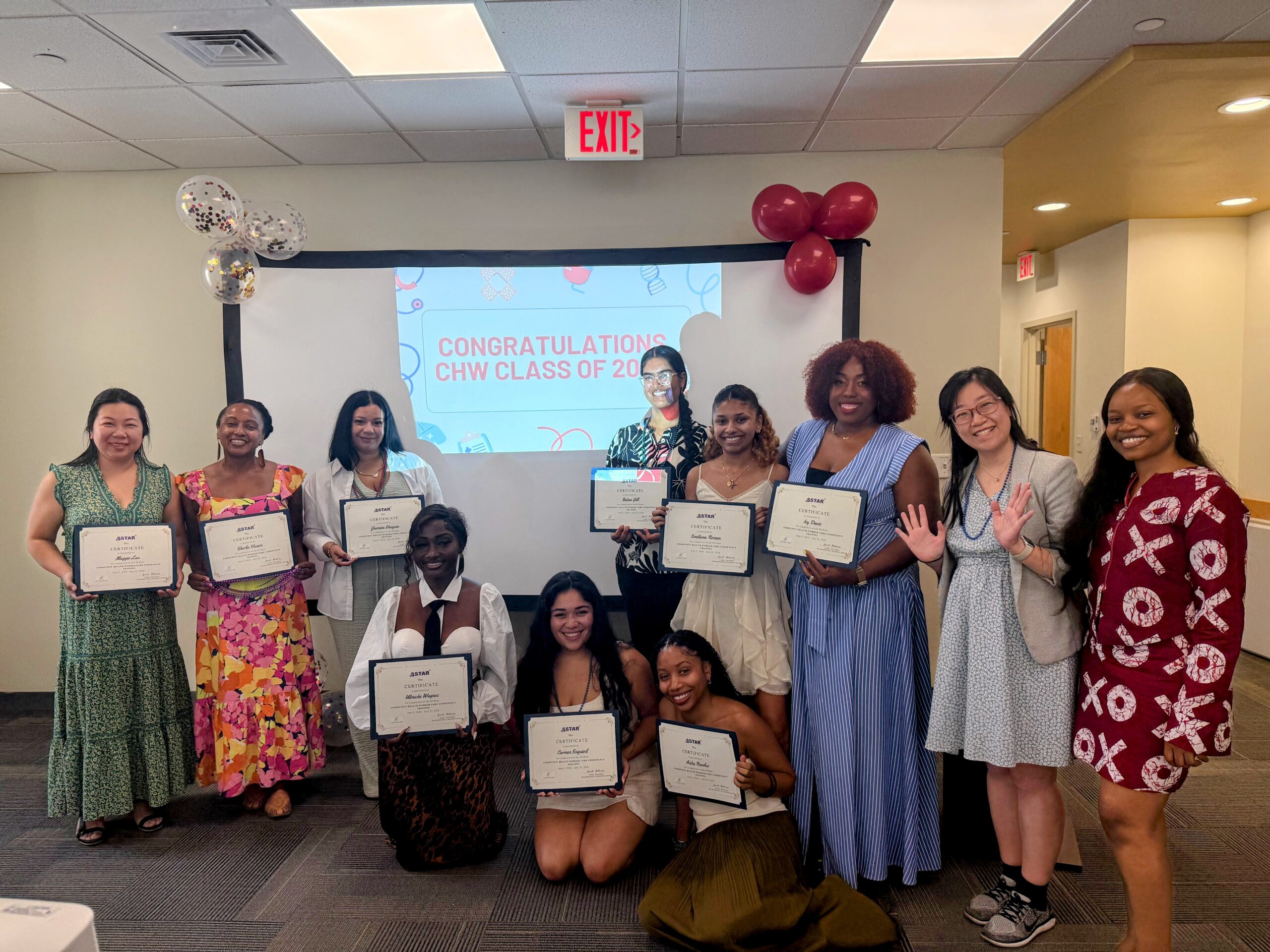
Celebrating a milestone: DotHouse Doula Fellows graduated in July 2026, pictured here with AWFH Community Health Worker (CHW) Trainer Xukun Guo.
Doulas in Community: Carrying Care Forward
How Asian Women for Health and DotHouse Health are bringing doula care and community health work together.
Pregnancy and childbirth can be challenging enough without also having to navigate language barriers, unfamiliar healthcare systems, or cultural differences in how we understand and talk about health.
For the past two years, Asian Women for Health (AWFH) and DotHouse Health have partnered to train women and gender-expansive individuals from Greater Boston communities as both Community Health Workers (CHWs) and doulas—building a maternal health workforce that reflects the languages, cultures, and lived experiences of the families they serve.
This summer, we celebrated our newest graduating cohort and an important milestone: 19 participants have now completed the program over two years, collectively representing 8 languages.
But the impact of this partnership goes beyond the numbers.
Why This Matters in Boston
Boston is known for world-class healthcare, but access to leading medical institutions does not mean everyone experiences the same outcomes.
According to the Boston Public Health Commission’s Live Long and Well report, Black infants in Boston experience approximately twice the rates of preterm birth and low birthweight—and approximately three times the rate of death—compared with white infants.
Across Massachusetts, the Department of Public Health found that severe maternal morbidity nearly doubled between 2011 and 2020, with Black non-Hispanic birthing people consistently experiencing the highest rates.
These disparities have many causes and require solutions at multiple levels. They also remind us that equitable maternal health is about more than access to clinical care. People need to feel informed, heard, and able to advocate for themselves.
Why Doulas and Community Health Workers Matter
Doulas provide continuous, nonclinical support before, during, and after childbirth. Community Health Workers help people navigate healthcare and social services, access resources, understand health information, and advocate for their needs. Together, these roles can provide support that extends beyond the clinical setting—from preparing questions before a prenatal appointment to navigating resources after returning home.
Another graduate, Carmen E. explains, “One of the coolest things that I’ve definitely learned is that there are ways to support people that aren’t inherently clinical.”
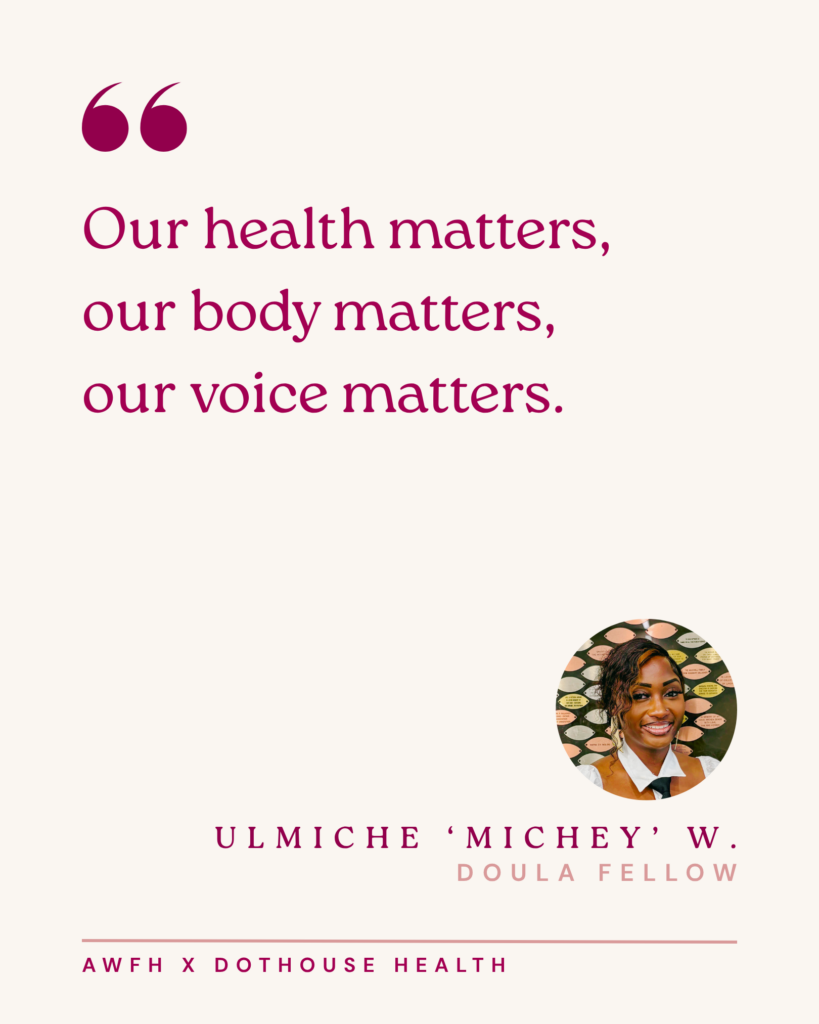
For families navigating linguistic or cultural barriers, that support can be especially meaningful. Michey experienced this firsthand while helping someone who struggled to communicate within the healthcare system: “I had to become that voice for her constantly, and I was glad I was there because at certain moments she didn’t feel like she was being heard because of the language barrier.”
Doulas and CHWs complement the work of clinical providers by helping families understand their options, communicate their needs, and navigate the systems surrounding their care.
Investing in the Strengths Already Around Us
At AWFH, we believe communities already hold tremendous knowledge about their own health and well-being. Many participants who come through our Community Health Impact (CHI) Workforce Development Initiative have already served as caregivers, interpreters, advocates, and resource navigators within their families and communities. Through training, mentorship, and hands-on learning, the Doula-CHW program builds on those strengths while creating pathways into community health and maternal health careers.
For Michey, that means carrying forward the support she once received herself: “I just want to be there for another mom the same way my doula was there for me—and help them advocate for themselves.”
That ripple effect is central to community health work: investing in individuals who can carry new knowledge and skills back into the communities they know.
A Partnership Rooted in Community
The AWFH and DotHouse Health partnership brings together two complementary strengths. DotHouse Health brings deep experience providing healthcare and community services in Dorchester and surrounding neighborhoods. AWFH brings a community-centered approach to workforce development that prepares culturally and linguistically diverse CHWs to serve their communities. Together, we’ve created a model that connects workforce development, maternal health, and health equity right here in Boston.
Looking Ahead
This summer’s graduation marks the completion of the current two-year partnership. Continuing the Doula-CHW program will require additional funding and partners who share our commitment to culturally responsive maternal health and community workforce development.
We believe this is a model worth continuing.
Meeting the needs of Greater Boston’s diverse communities requires more than getting people through the doors of a healthcare system. It means ensuring people can understand their care, make informed decisions, and have their voices heard.
As Michey reminds us, “Being there and understanding someone’s culture literally goes a long way.”
And that belief sits at the heart of our work at AWFH: when we invest in the people already caring for their communities, we strengthen the health of the entire community.