 As our AYMHI (Asian Women for Health Youth Mental Health Initiative) Peer Leaders stood before a room of full students eager to talk about mental health, they invited everyone into reflection: What does mental health mean in your culture? In the place you call home?
From the moment AWFH’s culturally tailored workshop began at the Harvard’s Undergraduates in Asia conference, it became clear that mental well-being is both urgent and universal. Over a 100 students from across Asia and the diaspora – Bangkok, Hong Kong, Mumbai, Seoul, Singapore, Tokyo, Taipei, Istanbul, Manila, Saigon, and here in Cambridge, gathered to learn from each other. The discussion exposed the diverse ways mental health is perceived and addressed, underscoring the value of open, cross-cultural conversation.
The Peer Leaders posed other powerful questions: What does being mentally well look like to you? About the words people use, or don’t use, to talk about mental health. About the systems that exist, or the ones that are missing. The session surfaced how stigma endures in some societies, but younger generations are increasingly willing to speak out and support one another.
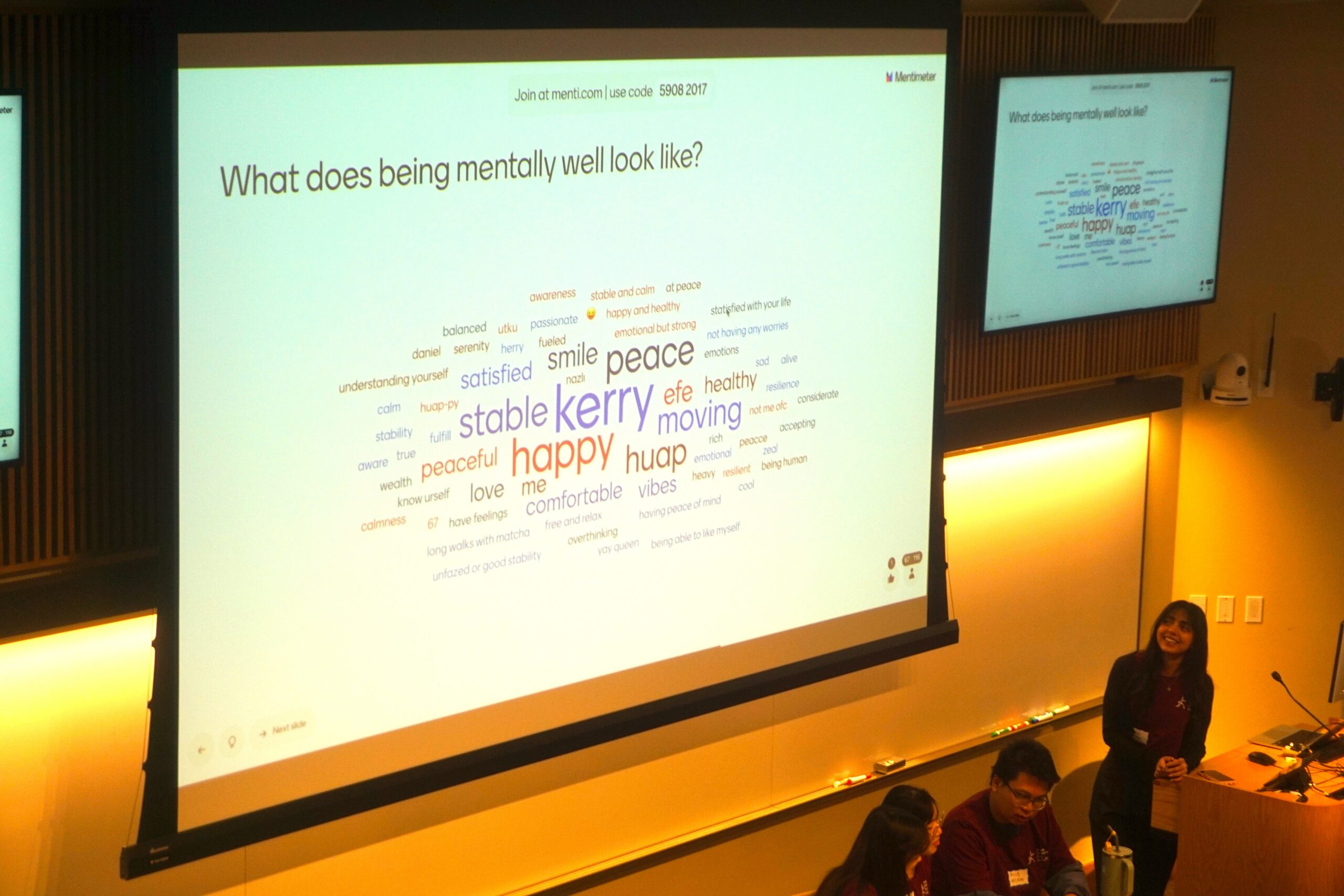
Student responses were shared through a live Mentimeter word cloud, and for many, being mentally well meant ‘feeling peaceful,’ to ‘feeling alive’ to ‘being able to like myself’ to ‘health and stability,’ and more. These responses reflected both their unique backgrounds and shared hopes.
This wasn’t a traditional lecture. It wasn’t a panel of experts speaking to young people about what they should know. It was a vibrant exchange of lived experiences, of stories breaking through persistent stigma, generational divides, and the challenge of finding support.
As Harvard Undergraduate Bangkok delegation wrote, “This session reminded us that mental health is not only a personal issue but a collective one. Creating safe spaces for conversation and understanding across cultures is a crucial step toward healing, connection, and long-term well-being.”
The group moved from reflection to action, brainstorming ways to break down barriers to mental healthcare. Energized by the realization that they were not alone in their struggles – or their desire for change. Themes of accessibility, education, community, and compassion emerged. By the end of the session, many students left the room feeling less alone and more hopeful. Having built new connections and concrete strategies for change. That together, they can drive lasting change.
AYMHI trains youth as Peer Leaders, equipping them to lead mental health conversations in their schools and communities. Through dialogue and creative storytelling, young people create spaces where their peers feel seen, heard, and supported.
Our Peer Leaders are young people from AANHPI communities who have faced their own mental health challenges. They understand what it means to navigate systems that weren’t built for them. They draw on their own experiences to guide others, transforming challenges into leadership and building a movement rooted in lived experience.
Want to be part of this movement? Learn more about becoming an AYMHI Peer Leader here. Join us as we reimagine mental health care together.