 The months after graduation often expose hard truths about the job market. Between applications is a gap that tests more than just qualifications – rejections that feel personal, self-doubt that lingers, especially for those navigating a system not built with their identities in mind.
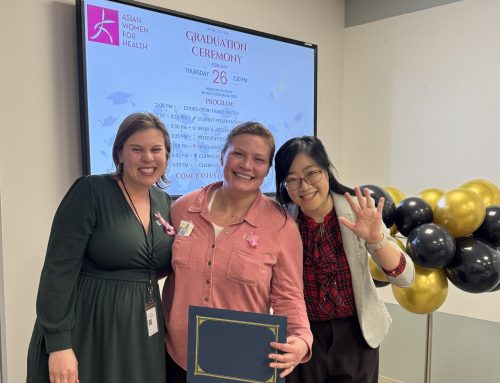
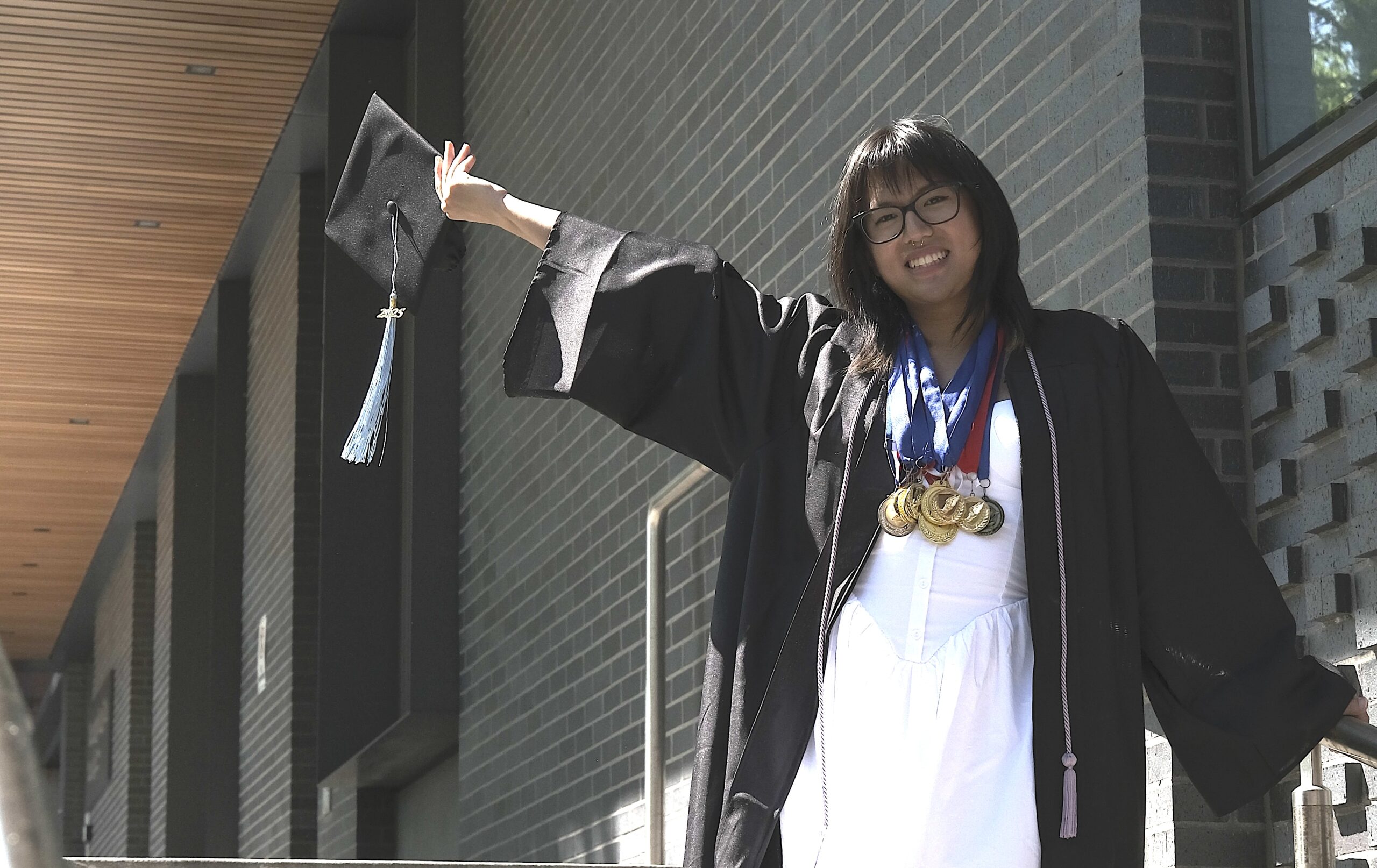
For Rose Fotino, a Korean trans woman and recent Tufts graduate, the period after completing her CHW training tested her resilience in ways she never imagined. What she discovered though, was this: when you have people in your corner who truly see you, rejection becomes practice – not failure.
Today, Rose serves as a Brain Injury Community Center Coordinator at Vinfen. Her journey – from that first meeting with an AWFH staff member to this moment – shows how the right support can change everything.
Q. What inspired you to pursue the Community Health Worker training at AWFH?
I met former AWFH staff Sofia Li at Chinatown’s August Moon Festival back in 2024, who strongly encouraged me to apply at the AWFH table. I had also taken a course in Health Economics at Tufts that past spring, and it was too late for me to add a Community Health major by that point, so I figured the program would help me out a lot. And because I was pretty new to the field of community health, the job placement assistance advertised in the flyers gave me tons of incentive to apply.
Q. How did the CHW training prepare you for the work you’re doing now at Vinfen?
The CHW training helped me reframe my thinking and approach to always put patients first and meet them where they are at. I was fortunate enough to have many transferable skills between community health work and my on-campus role as a Resident Assistant, as my residents’ needs were always my priority. The training really helped me be able to do the same in a health setting, where my potential patients are even more diverse in their backgrounds, needs, and goals.
Q. Can you walk us through your job search journey after graduation? What kept you motivated during those months of applications, especially when things didn’t work out right away?
I graduated from the training and from Tufts University around the same time. Finding a full-time job afterwards definitely took a mental and physical toll on me, especially coming from an elite institution where many of my peers had full-time offers since senior year began. However, I knew the training, my past work, and my education prepared me well for the challenge, and I certainly did not want to let these things go to waste. I was lucky enough to work my summer job at school that I had done the previous two summers, which certainly helped out as well.
Q. Tell us about Kristen’s (Senior Program Manager, AWFH) support during your job placement process. What difference did it make having someone like Kristen in your corner compared to navigating the job market on your own?
Kristen was so helpful in so many ways, too many to list here. If I had to name one reason, it would be . Like I said earlier, I was still pretty new to the healthcare world going into the training, especially for any patient-facing positions that I may consider. Had she not connected me with Asian Women for Health’s partners, I definitely would not be where I am today. I was able to much more easily land interviews with organizations that AWFH is partnered with. Even though many of the roles I interviewed for didn’t lead to a role, the practice I gained from the process helped me get to where I am now.
Q. As a Korean trans woman, did you have any unique challenges that you faced while looking for a job?
While I did not face any hateful or ignorant comments directly, I know this is unfortunately not the case for everyone who shares a similar identity to myself. As far as internal challenges, I certainly had many. Most other trans women I see are either through social media or trans-specific spaces, not the workplace. Not that these are bad things by any means, but I had a sense that I may feel misunderstood and outcasted once I actually did get a job. More importantly, rejections felt extremely demoralizing even knowing how tough the current job market is for most people because I know that there are huge disparities in employment between trans and cis individuals. However, I didn’t want statistics to guide my future, and I’m very lucky and grateful to be where I ended up.
Q. How has your lived experience shaped your approach to supporting others in your community?
My high school didn’t have designated all-gender restrooms, a huge oversight as someone navigating gender transition. I knew others around me would benefit from changing this oversight, whether it be for navigating gender identity, accessibility, or privacy reasons. One day, I brought up my concerns with my school’s administrative staff, and they were able to open two all-gender restrooms within that school year, and another the following year. Ever since high school, I have carried this proactive energy with me to Tufts and the Greater Boston area, involving myself in community spaces whenever I can to help improve the lives of those around me.
Q. Congratulations on your new role as a Brain Injury Community Center Coordinator at Vinfen! How do you hope to bring the skills and experiences from the CHW program into your new role?
Again, I really want to put patient needs before anything else. I don’t want to put any limits on what my patients can achieve or become. The BICC is so crucial for giving individuals with brain injuries a space where they can be themselves and grow, and I want to preserve and expand that as much as possible.
Q. Looking back, what does this journey from training to rejection to success, teach you about resilience and advocacy?
If you really care about advocating for patient needs and letting patients thrive, do not give up. Do not let rejections prevent you from entering community health work. There are always organizations who will be happy to let you join if you apply yourself well, and there will always be patients who will love your support.
Q. What advice do you have for new candidates joining the CHW program?
Utilize AWFH’s resources as much as possible. Everyone on staff is super supportive and wants the best for their trainees. Don’t be afraid to ask questions about opportunities, connections, and interview practice. You’re going to need all the help you can get, especially given current economic and public health conditions. And luckily, you have amazing advisors to help you through it!
Q. If you could describe AWFH’s role in your journey in one sentence, what would it be?
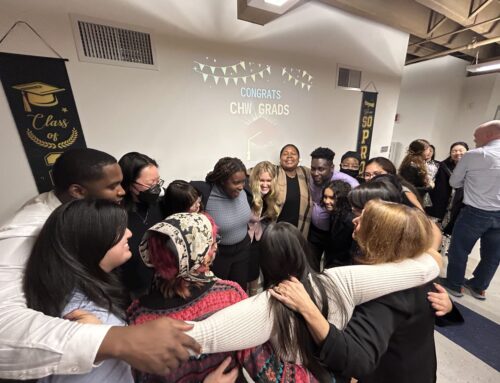
I will never forget the program, my peers, and my advisors, and will forever be grateful for you all.